Propane vs. Natural Gas on the Nevada Side of Lake Tahoe

Nevada Tahoe Utility & Winter Buyer Guide
Propane vs. Natural Gas on the Nevada Side of Lake Tahoe: A Buyer's Guide
Before you close on a Nevada Tahoe mountain home, find out how the property is fueled, whether a propane tank is owned or leased, and how winter deliveries work.
If you're trading a high-tax state for Nevada's zero individual state income tax, welcome to the Nevada shore of Lake Tahoe.
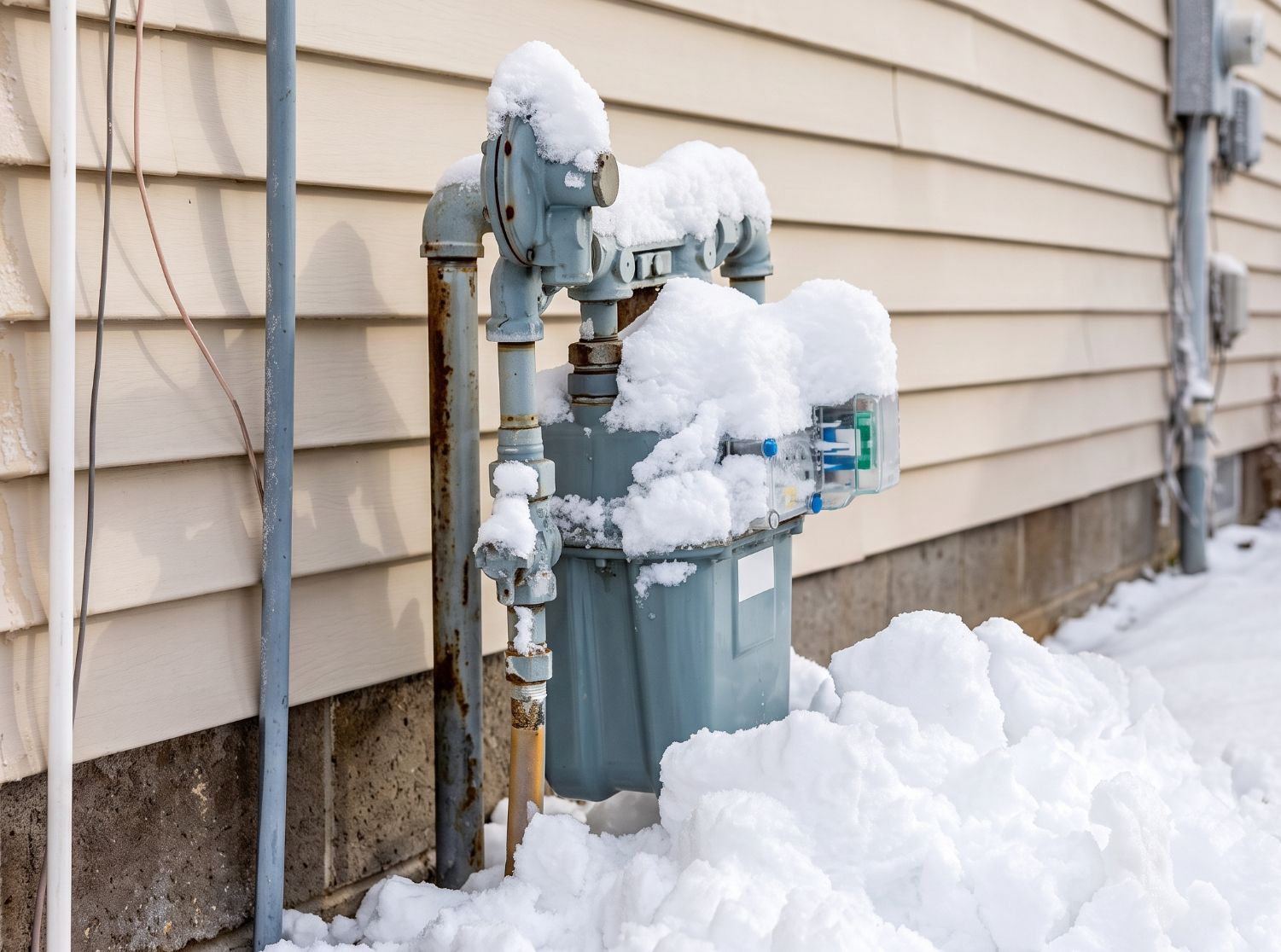
Before you close on your mountain home, there is one infrastructure detail many out-of-state buyers do not expect: not every Tahoe property gets fuel from a natural-gas line under the street.
Some homes are connected to natural gas. Others rely on a private propane tank stored on the property.
Knowing which system the property uses, who owns the tank, and how winter delivery works can prevent a costly surprise during your first Sierra winter.
Why This Matters for Your Nevada Move
Nevada's lack of an individual state income tax is one of the major reasons buyers relocate from California, Washington, and other higher-tax states.
But mountain living comes with infrastructure differences that may not be obvious during a property tour.
Heating, boilers, backup generators, heated driveways, snow-melt systems, spas, and other high-demand equipment may depend on either natural gas or propane.
Understanding that utility setup should be part of your property due diligence before you write an offer.
Calculate Your Potential Nevada Tax Savings
If Nevada's tax structure is one reason you are considering a Tahoe move, estimate the potential savings while also accounting for utilities, winter fuel, insurance, and other property-specific carrying costs.
Use the NV Tax Savings CalculatorNatural Gas or Propane? It Depends on the Neighborhood
According to the source, most of the Nevada side of Lake Tahoe is served by natural gas, but some pockets still rely on propane.
Natural-gas service is provided by Southwest Gas, and mains reach many established neighborhoods around the lake.
Coverage can still vary by street and even by parcel, especially on steeper mountain roads.
Incline Village
Much of Incline Village is described in the source as having access to Southwest Gas natural-gas mains, particularly in established neighborhoods.
Crystal Bay
Natural gas is also available in much of Crystal Bay, but the specific parcel should still be confirmed before relying on utility availability.
Higher Elevations
Homes farther from established utility mains may rely on private propane storage instead of piped natural gas.
Rural East Shore Parcels
Rural or larger-acreage East Shore properties are more likely to use propane where a nearby gas main is unavailable.
Glenbrook
The source specifically identifies Glenbrook as an example of a private enclave where homes may rely on propane because there is no nearby natural-gas main.
Never Assume Utility Service From the Neighborhood Name
A listing in Incline Village or Crystal Bay does not automatically tell you whether the exact home is connected to a gas main.
Confirm service for the specific parcel before you write an offer.

What Can Natural Gas or Propane Power?
Both fuels can support many of the same systems in a luxury Tahoe home.
The main difference is how the fuel reaches the property: natural gas arrives continuously through a utility line, while propane is delivered by truck and stored on-site.
Heating & Boilers
Both fuel types can serve high-capacity boilers and whole-home heating systems.
Heated Driveways
Gas-fired or propane-fired boiler systems can supply hydronic snow-melt systems for driveways and walkways.
Backup Generators
Whole-home backup generators may be configured to use either natural gas or propane depending on the property's utility setup.
Spa & Pool Heating
High-output heaters for spas, pools, and other luxury amenities can also rely on either fuel source.
Should You Lease or Own Your Propane Tank?
If the property uses propane, one of the most important questions is whether the tank belongs to the homeowner or the propane supplier.
That ownership detail can affect which company you are allowed to buy fuel from for as long as you own the property.
| Feature | Leased Propane Tank | Customer-Owned Propane Tank |
|---|---|---|
| Who Owns the Tank? | The propane supplier owns the tank installed or buried on the property. | The homeowner holds legal ownership of the tank. |
| Who Can Supply Fuel? | According to the source, the owner is generally required to purchase propane from the company that owns the tank. | The homeowner can generally compare prices among licensed propane suppliers serving the area. |
| Shopping for Price | More limited because the tank relationship ties the property to the supplier. | Greater flexibility to compare suppliers and delivery pricing. |
| What to Verify in Escrow | Confirm lease terms, supplier, fees, and whether the agreement transfers with the property. | Confirm that tank ownership is included in the sale and documented appropriately. |
Tank Ownership Is an Easy Escrow Question to Resolve
If a Tahoe home uses propane, ask for written confirmation of whether the tank is leased or homeowner-owned.
The source suggests that discovering a leased tank during escrow can also become a useful point for negotiation.
Planning to Make Nevada Your Primary Residence?
Understanding your new home's utilities is only one part of a California-to-Nevada or Washington-to-Nevada move. Use The 2026 NV Residency Guide to understand the broader practical transition.
Explore The 2026 NV Residency Guide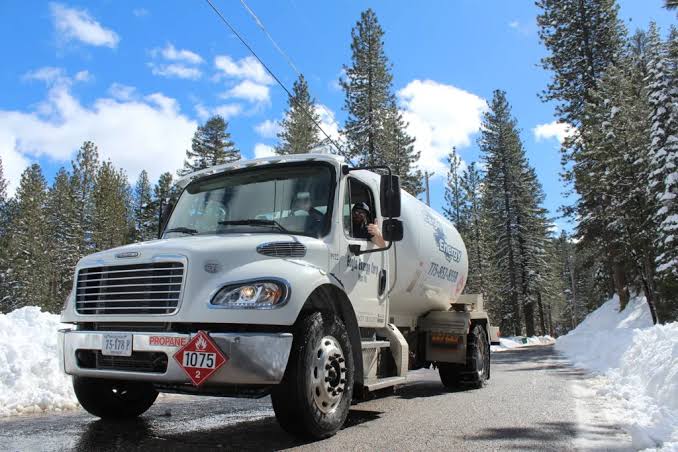
How Do Delivery Trucks Find a Buried Tank Under the Snow?
A buried propane tank can disappear under several feet of Tahoe snow, but the source describes this as a manageable winter-maintenance issue when the property is prepared correctly.
Mark the Fill Location
The fill valve should be identified with a tall, brightly colored snow marker or stake that remains visible above the expected snowpack.
Keep a Clear Delivery Path
The homeowner or property manager should maintain a shoveled path from the driveway to the tank so the delivery driver can safely reach the fill point.
Use Automatic Tank Monitoring
The source notes that many owners use wireless monitors that track remaining fuel and can help trigger a delivery before the tank runs low.
Why a Tank Monitor Can Be Valuable
The source describes automatic monitoring systems that can notify the supplier when the tank approaches roughly 30% remaining.
That can help schedule a refill before a major storm arrives instead of discovering a low tank during difficult winter access.
Natural Gas vs. Propane at a Glance
Both can work well in a Tahoe home. The differences mainly involve delivery method, supplier choice, and winter logistics.
| Feature | Natural Gas | Propane |
|---|---|---|
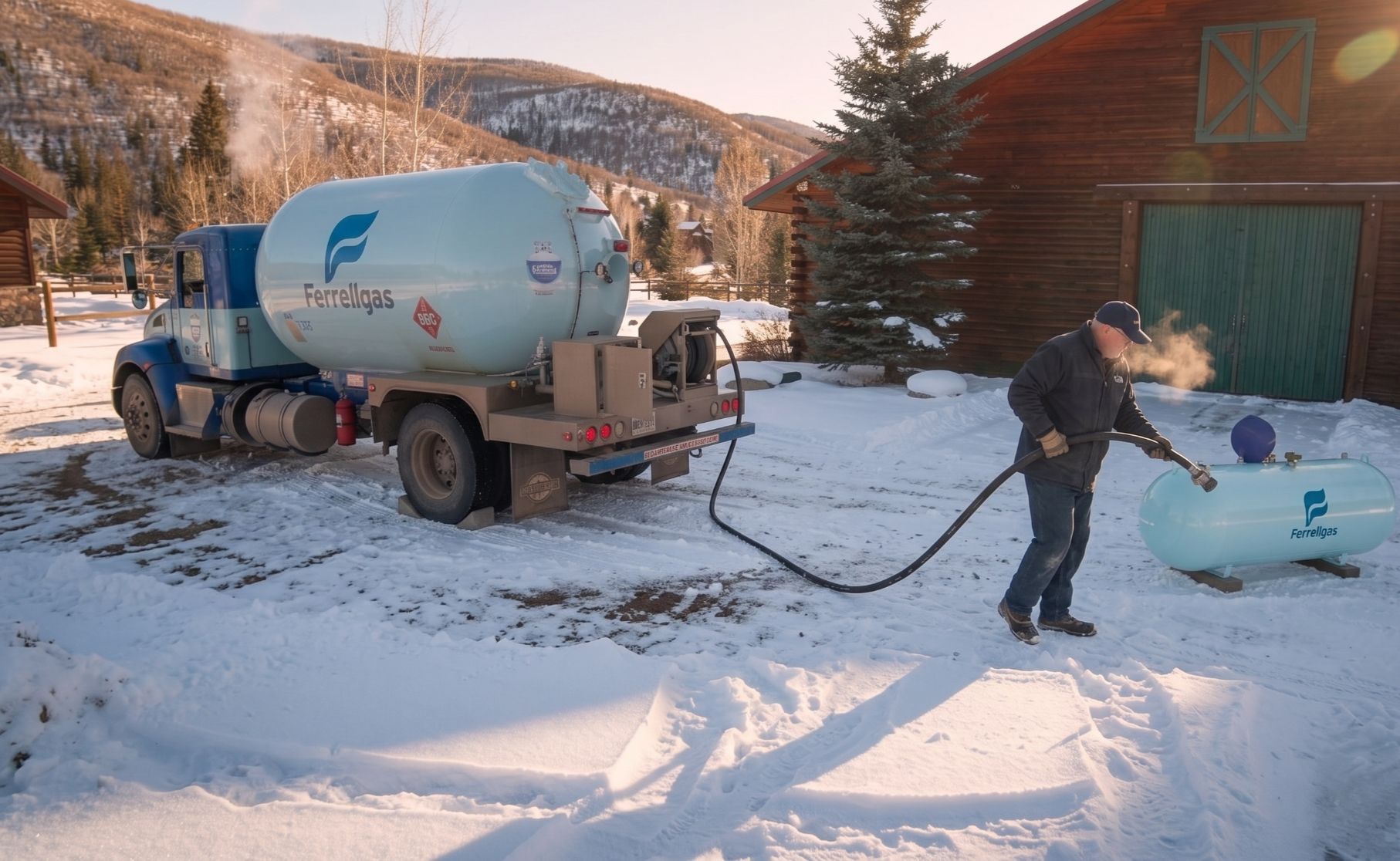
| How It Arrives | Through an underground utility pipe from the street. | Delivered by truck and stored in a tank on the property. |
| Who Supplies It | Southwest Gas where natural-gas service is available. | Supplier options depend in part on whether the propane tank is leased or homeowner-owned. |
| Where It Is Common | Established neighborhoods with nearby utility mains, including much of Incline Village and Crystal Bay according to the source. | Higher-elevation parcels, rural East Shore properties, and private enclaves such as Glenbrook according to the source. |
| Winter Consideration | Fuel arrives continuously through the underground utility line and is metered like a normal utility. | Requires tank-level planning, visible snow markers, delivery access, and timely refills. |
| Fuel Shopping | Utility service comes from the serving natural-gas provider. | Homeowner-owned tanks may offer greater ability to compare suppliers than leased tanks. |
What Should You Verify Before Buying?
Utility setup is one of the easiest property questions to resolve once you know to ask it.
Nevada Tahoe Fuel-System Due Diligence
- Confirm whether the exact property is connected to a Southwest Gas natural-gas main.
- If the home uses propane, confirm whether the tank is leased or homeowner-owned.
- Review any propane supplier agreement associated with a leased tank.
- Confirm the tank location, size, age, and condition.
- Ask whether the property has an automatic tank monitor.
- Check whether the fill location has an adequate winter snow marker.
- Determine who maintains the delivery path during storms.
- Review recent propane or natural-gas usage if available.
- Identify major fuel loads such as boilers, heated driveways, generators, spas, or pool equipment.
- If the tank is homeowner-owned, ask which licensed local suppliers currently serve the property.
Build a More Deliberate Nevada Transition
If your Tahoe home will become part of your Nevada residency strategy, use the NV Residency Guide - Safe Harbor Checklist to organize relocation documentation and practical move steps alongside your property due diligence.
Get the Safe Harbor Checklist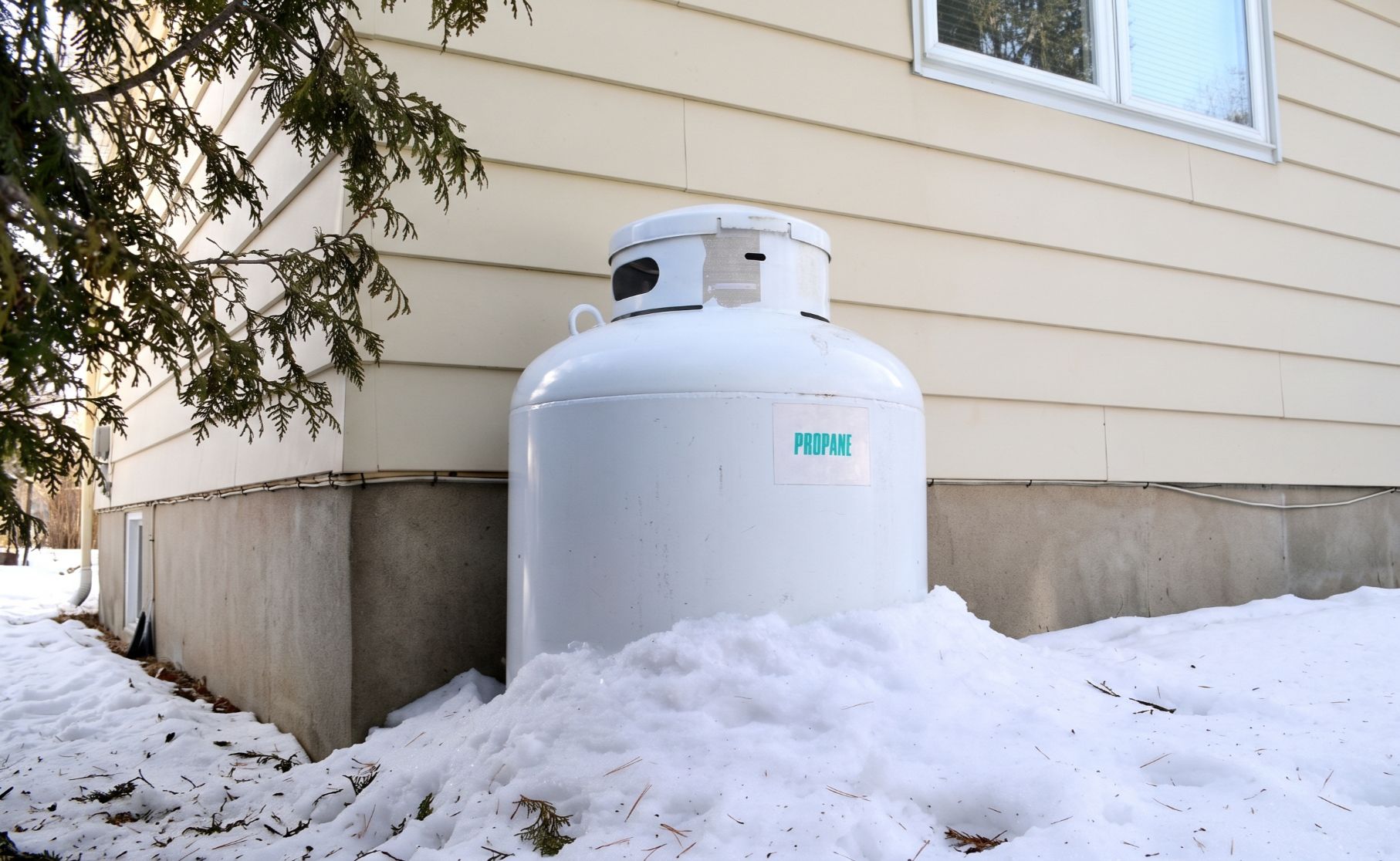
The Bottom Line for Buyers
Knowing whether a home uses a gas main or propane tank, and whether that tank is leased or owned, is one of the easiest pieces of due diligence to complete before closing.
It can affect your monthly costs, your freedom to compare fuel suppliers, and how you plan for a Sierra winter.
It is much easier to resolve these questions during the property search and escrow period than after the first major winter storm arrives.
Not Sure What Utility Setup a Tahoe Property Has?
Tahoe Tony has spent more than 28 years helping buyers navigate Incline Village, Crystal Bay, Glenbrook, Zephyr Cove, and the Nevada side of Lake Tahoe.
Before you make an offer, he can help investigate gas availability for a specific address, confirm propane-tank ownership, and identify the winter-delivery questions you should resolve during due diligence.
Review a Property's Utility SetupThis article is for general informational purposes only and does not constitute utility, propane, natural-gas, engineering, contractor, safety, tax, legal, financial, or real estate advice. Utility availability, propane supplier policies, tank ownership, lease terms, fuel pricing, delivery practices, service territories, equipment requirements, and winter access can change and may vary by property. Buyers should independently confirm natural-gas availability for the exact parcel with the serving utility and verify propane-tank ownership, supplier agreements, tank condition, delivery requirements, and other property-specific details with appropriate licensed professionals before removing contingencies. Nevada residency and tax matters should be reviewed with a qualified CPA or tax attorney. Tony Tuoto is a licensed real estate broker, not a utility representative, propane supplier, engineer, contractor, CPA, or tax attorney.
Nevada Tahoe Propane & Natural Gas FAQ
Frequently Asked Questions
Common questions Nevada Tahoe buyers ask about natural-gas service, propane tanks, leased vs. owned tanks, winter delivery, and mountain-home utility planning.
Does every home on the Nevada side of Lake Tahoe have natural gas? +
No. The source says much of the Nevada side has natural-gas service, but some higher-elevation properties, rural East Shore parcels, and private enclaves rely on propane instead. Confirm the exact parcel before making an offer.
Who provides natural gas on the Nevada side of Lake Tahoe? +
According to the source, Southwest Gas provides natural-gas service to many established Nevada-side Tahoe neighborhoods, including much of Incline Village and Crystal Bay. Availability can vary by specific property.
Which Nevada Tahoe homes are more likely to use propane? +
The source identifies higher-elevation parcels away from established gas lines, rural East Shore acreage, and private enclaves such as Glenbrook as examples where propane may be used.
What is the difference between a leased and owned propane tank? +
With a leased tank, the propane supplier owns the tank and the homeowner is generally tied to that supplier for fuel. With a homeowner-owned tank, the owner can generally compare pricing among licensed suppliers serving the area.
How do I know whether the propane tank is owned or leased? +
Ask for written confirmation during escrow and review the seller disclosures, title information, and any propane-supplier agreement associated with the property.
How does a propane delivery driver find a buried tank in deep snow? +
The fill location should be marked with a tall, brightly colored snow stake that remains visible above the snowpack. The homeowner or property manager should also maintain a clear path so the driver can safely reach the tank.
What is an automatic propane tank monitor? +
A wireless tank monitor tracks the remaining propane level. The source says many Tahoe homeowners use monitors that can alert the supplier when fuel approaches roughly 30%, helping schedule a refill before the tank becomes critically low.
Can propane power a heated driveway and backup generator? +
Yes. The source notes that propane and natural gas can both power high-capacity boilers, heated driveway systems, backup generators, and pool or spa heaters.
Is natural gas easier to manage during a Tahoe winter? +
Natural gas arrives continuously through an underground utility line where service is available, so there is no tank to refill. Propane requires fuel-level monitoring and winter delivery access, but those logistics can be managed with proper planning.
What should I verify before buying a Nevada Tahoe home with propane? +
Confirm whether the tank is owned or leased, the tank's location and condition, the current supplier, any lease terms, whether an automatic monitor is installed, and how delivery access is maintained during winter.
If your property purchase is also part of a Nevada relocation, review the 2026 NV Residency Guide and the Safe Harbor Checklist .
Categories
Recent Posts