
Lake Tahoe Pier & Dock Rules
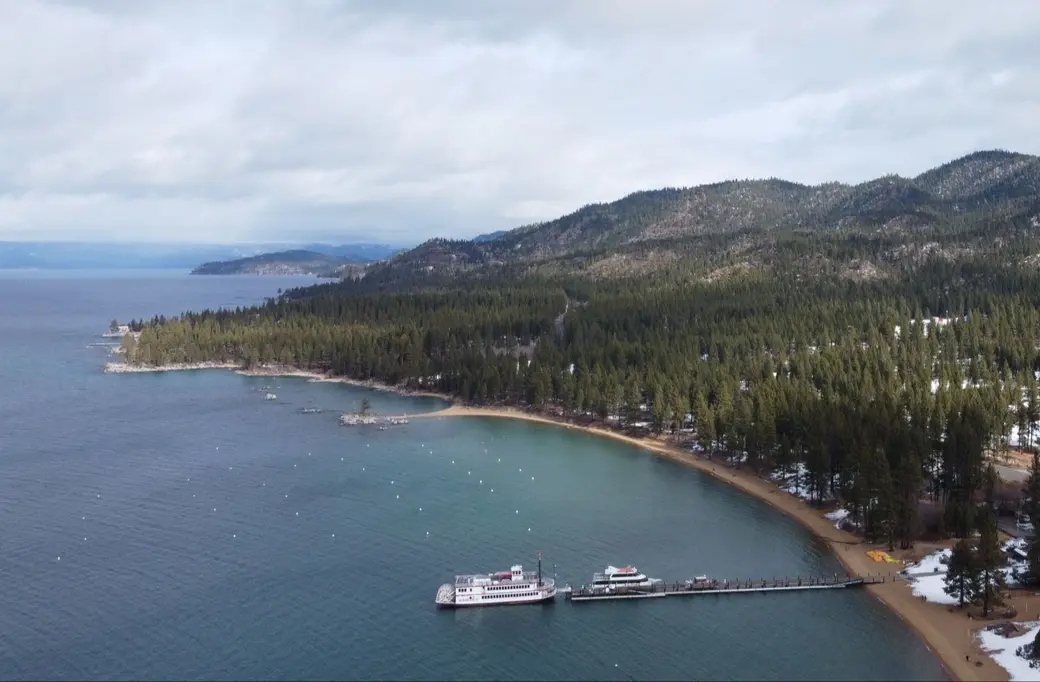
Nevada Tahoe Lakefront Buyer Guide
Moving to Tax-Free Nevada? What to Know About Lake Tahoe Pier & Dock Rules Before You Buy Lakefront
A guide for California, Washington, and other high-tax-state buyers exploring lakefront property on the Nevada side of Lake Tahoe.

Moving from California, Washington, or another higher-tax state? Nevada's lack of an individual state income tax can make the Nevada side of Lake Tahoe an attractive place to establish your primary residence.
Incline Village, Crystal Bay, Glenbrook, and Zephyr Cove combine the Tahoe lifestyle with Nevada's tax environment. But buying lakefront property involves important details beyond the home itself.
The water in front of your property is not automatically yours to build on.
Piers, docks, and buoys are regulated by the Tahoe Regional Planning Agency (TRPA), a bi-state agency responsible for planning and environmental protection throughout the Lake Tahoe Basin.
Understanding a property's existing shoreline rights before making an offer can help prevent expensive surprises after closing.
Can I Build a New Private Pier on a Nevada Lakefront Property?
Possibly, but new private pier construction is tightly limited under TRPA's Shoreline Plan.
The plan allows up to 128 additional private piers and 10 additional public piers lakewide. Of the private pier allocations, only 25 are designated for single-parcel piers.
Allocations are released over time, and applicants must qualify under TRPA's shoreline, environmental, and scenic standards.
Why Existing Pier Rights Matter
A permitted private pier can be a significant feature of a luxury lakefront property because opportunities to construct additional piers are limited.
However, a pier's contribution to property value depends on its permits, ownership rights, condition, usability, water depth, and comparable local sales.
Before treating an existing pier as a major part of the purchase price, verify exactly what is included in the sale.
How Does TRPA Allocate New Pier Permits?
Obtaining a new pier involves more than submitting a construction application. TRPA has a separate allocation process that determines which eligible projects may proceed to full permit review.
Limited Allocations
TRPA distributes new private pier allocations in phases, generally following a two-year cycle. Availability depends on the applicable category, location, and remaining allocations.
Single-Parcel Lottery
Eligible single-parcel pier applications compete for a limited number of allocations. When demand exceeds availability, TRPA uses a random lottery process.
Multiple-Parcel Prioritization
Multiple-parcel proposals are prioritized according to criteria that include how much future pier development potential the project retires and the shoreline's scenic sensitivity. Tied applications may require a random drawing.
Full Permit Review
Receiving an allocation provides the opportunity to submit a complete shoreline project application. It does not guarantee final approval or permission to begin construction.
Before Relying on "Pier Potential"
Ask whether the property already has a valid pier permit, an existing allocation, or documented eligibility to apply.
Verify the latest application calendar, allocation availability, and property-specific requirements directly with TRPA.
What Could Your Nevada Move Mean for Your Taxes?
If your Lake Tahoe purchase is part of a relocation from California or another higher-tax state, estimate your potential Nevada tax savings while evaluating the total cost of lakefront ownership.
Use the NV Tax Savings Calculator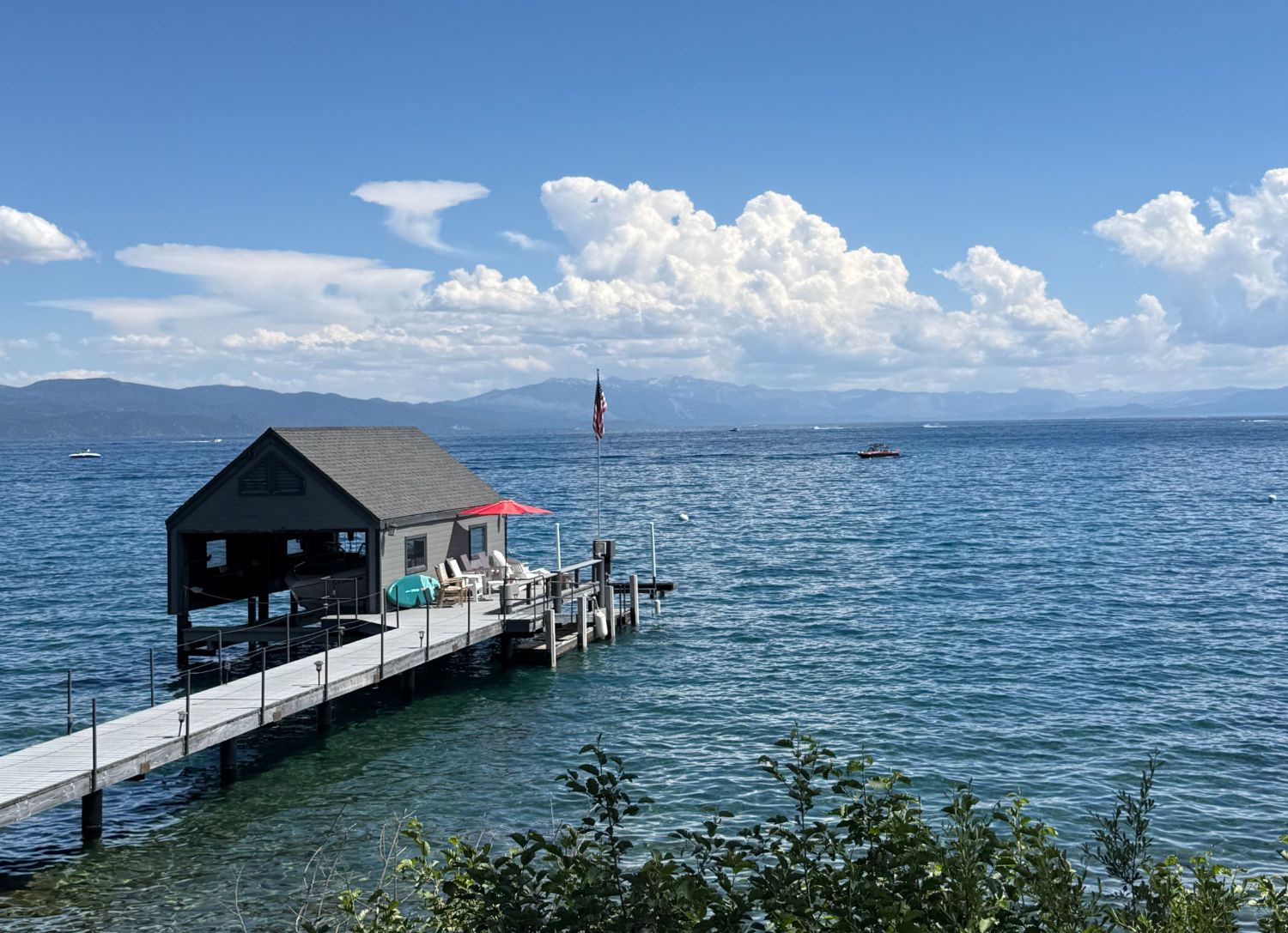
What Makes a Lakefront Parcel Eligible for a New Pier?
Even a property owner who receives an allocation must satisfy TRPA's shoreline development requirements.
Eligibility depends on the legal status of the parcel and the environmental characteristics of its shoreline.
Littoral Rights
The property must qualify as a littoral parcel, meaning its land adjoins or abuts Lake Tahoe's legal high-water line. This should be established using the recorded deed, legal description, and other appropriate documentation.
Fish Habitat
TRPA evaluates potential impacts to fish habitat and restricts development in sensitive areas. Certain projects may require additional environmental mitigation, while other locations may be ineligible.
Shoreline Restrictions
Shorezone Preservation Areas, Stream Mouth Protection Zones, existing deed restrictions, and other limitations can affect whether a parcel qualifies.
Scenic Standards & Spacing
Pier placement and design must meet applicable scenic standards, shoreline setbacks, pier spacing, and other project-specific development requirements.
Littoral Rights Do Not Guarantee a New Pier
Having shoreline frontage is an important starting point, but it does not guarantee that TRPA will issue a new pier allocation or permit.
A land-use attorney and TRPA specialist can help evaluate the property's legal shoreline boundaries and development potential.

Single-Use vs. Joint-Use Piers: What's the Difference?
When comparing lakefront properties, it is important to understand whether a pier serves one owner, several neighboring properties, or an entire HOA community.
TRPA also distinguishes between multiple-parcel allocation projects, which retire future pier development potential, and multiple-use piers, which physically serve more than one parcel.
| Pier Type | Who It Serves | Important Considerations |
|---|---|---|
| Single-Use Pier | One littoral parcel. | Limited single-parcel allocations, lottery eligibility, applicable TRPA design standards, and documented ownership rights. |
| Multiple-Parcel Project | Involves two or more littoral parcels retiring development potential. Actual pier usage depends on the approved design and recorded agreements. | Prioritized according to TRPA's allocation criteria, with deed restrictions on participating parcels. |
| Joint-Use Pier | Two or more neighboring properties sharing one pier. | Recorded access and usage rights, shared expenses, maintenance, insurance, and possible restrictions on future pier development. |
| Community / HOA Pier | A subdivision, condominium community, or homeowners association. | HOA governing documents, membership rights, assigned boat spaces, usage policies, and applicable TRPA permits. |
Can a Shared Pier Be Longer?
Under the applicable TRPA design standards, certain multiple-use piers serving three or more primary residential littoral parcels may qualify for up to 15 additional feet of lakeward length.
Any proposed extension remains subject to the applicable design and permit requirements.
Planning to Make Nevada Your Primary Residence?
Buying lakefront property is one part of a California-to-Nevada or Washington-to-Nevada transition. Use The 2026 NV Residency Guide to understand the broader planning considerations involved in establishing your Nevada life.
Explore The 2026 NV Residency Guide
How Does a Joint-Use Pier Agreement Affect Ownership and Resale?
A joint-use pier is more than an informal arrangement between neighbors. The legal rights and responsibilities associated with the pier can affect how the property is used and transferred to a future buyer.
Multiple-parcel projects commonly involve recorded covenants or deed restrictions that limit the participating properties' future pier development options.
A recorded agreement can also establish shared ownership, access rights, and responsibility for ongoing expenses.
Cost Sharing
The agreement may specify how maintenance, repairs, insurance, replacement, and other shared expenses are divided among owners.
Usage Rights
Determine which owner has access to each boat space, lift, or other feature, and whether seasonal scheduling restrictions apply.
Access Easements
Some agreements allow neighboring owners to cross another parcel to reach the shared pier. Buyers should understand the exact location and extent of those rights.
Future Pier Rights
Participating parcels may be deed-restricted from pursuing their own separate piers in the future. Verify the restrictions that apply to the exact property.
Future Resale
Recorded obligations and usage rights may affect the property's marketability and the expectations of future buyers.
Have the Recorded Agreement Reviewed
Before making an offer, have your real estate attorney and title company review the recorded joint-use agreement, applicable easements, pier permits, and deed restrictions.
Confirm what you can use, what you must maintain, what you will pay, and whether any restrictions will continue after a future sale.
What If a Listing Advertises "Pier Potential"?
Pier potential is not the same as an existing, permitted, privately controlled pier.
A listing might describe possible future construction, an existing allocation, shared pier access, or a previously issued permit. These represent different legal and practical situations.
Ask for the actual documents and have the seller's representations verified before assigning value to a proposed or existing pier.
Lakefront Pier & Dock Due Diligence Checklist
- Confirm the property's littoral status and legal shoreline boundaries.
- Obtain all existing TRPA pier permits, approvals, and allocation records associated with the parcel.
- Verify whether the pier is privately controlled, jointly used, or part of an HOA.
- Review recorded covenants, easements, deed restrictions, and maintenance agreements.
- Confirm the permitted configuration of boatlifts, moorings, and related shoreline structures.
- Verify any buoy registrations associated with the property.
- Ask qualified professionals to evaluate the pier's condition, usable water depth, and potential repair obligations.
- Confirm any advertised future construction or expansion potential with TRPA before relying on it.
Build a More Deliberate Nevada Transition
If your lakefront purchase will become part of your Nevada residency strategy, use the NV Residency Guide - Safe Harbor Checklist to organize relocation steps and supporting documentation alongside your property due diligence.
Get the Safe Harbor Checklist
Why This Matters When Relocating From a High-Tax State
Buyers relocating from California, Washington, and other states are often coordinating their property purchase with a larger financial and residency transition.
That makes it particularly important to understand unfamiliar shoreline regulations before the purchase is complete.
TRPA has its own permit requirements, allocation process, environmental standards, and rules governing shoreline structures.
A private pier, a shared pier, and the possibility of building a pier in the future are very different things.
Understanding the rights attached to the specific property is an essential part of evaluating a Nevada Tahoe lakefront purchase.
Buying Lakefront on the Nevada Side of Lake Tahoe?
Tahoe Tony has spent more than 28 years representing buyers and sellers of premium properties in Incline Village, Crystal Bay, Glenbrook, Zephyr Cove, and the Nevada side of Lake Tahoe.
He can help coordinate the property search with title professionals, land-use attorneys, and TRPA specialists to investigate pier permits, buoy registrations, shoreline boundaries, and recorded usage agreements.
Know exactly what comes with your lakefront property before you make your purchase.
Schedule a Lakefront Property ConsultationThis article is provided for general informational purposes only and is not legal, tax, appraisal, engineering, title, environmental, or permitting advice. TRPA regulations, pier allocations, application schedules, shoreline restrictions, deed requirements, buoy registrations, and other permitting standards may change. Buyers should independently verify current, property-specific conditions with TRPA, their title company, a qualified real estate attorney, land-use professionals, and other appropriate advisors. Nevada residency and tax questions should be reviewed with a qualified CPA or tax attorney. Tony Tuoto is a licensed real estate broker, not a tax attorney, engineer, appraiser, or TRPA official.
Nevada Tahoe Lakefront FAQ
Frequently Asked Questions
Common questions luxury lakefront buyers ask about TRPA pier permits, littoral rights, private docks, joint-use agreements, and shoreline property due diligence.
Can I build a new private pier on Lake Tahoe? +
Possibly, but TRPA's Shoreline Plan tightly limits new pier construction. The plan allows up to 128 new private piers lakewide, including a limited number of single-parcel piers. Applicants must obtain an allocation and satisfy property-specific permitting requirements.
Does owning lakefront property guarantee pier rights? +
No. Littoral status, environmental restrictions, scenic requirements, deed restrictions, and the availability of allocations can all affect whether a pier may be constructed.
How does TRPA's new pier allocation process work? +
TRPA releases limited allocations in phases. Single-parcel applications may be selected by lottery when demand exceeds availability. Multiple-parcel applications are prioritized according to adopted criteria, with random selection for ties where necessary. An allocation does not guarantee final permit approval.
What are littoral rights on Lake Tahoe? +
Littoral rights are associated with property adjoining or abutting the lake's legal high-water line. A property's littoral status should be confirmed through its legal description and appropriate shoreline records.
What is the difference between a private pier and a joint-use pier? +
A single-use pier serves one littoral property. A joint-use pier serves multiple properties and typically involves recorded agreements covering access, maintenance, expenses, and usage rights.
Can a shared Lake Tahoe pier be longer than a single-use pier? +
Certain multiple-use piers serving three or more primary residential littoral parcels may qualify for up to 15 additional feet of lakeward length under applicable TRPA design standards. Approval remains project-specific.
Can I build my own pier if my property already shares one? +
Not necessarily. Parcels involved in a multiple-parcel pier project may have recorded deed restrictions that prevent separate future pier development. Review the actual recorded documents before making any assumptions.
What should I review before buying a property with a joint-use pier? +
Review the recorded joint-use agreement, access easements, shared expenses, maintenance obligations, boat-space assignments, pier permits, and any restrictions on future construction.
Does an existing pier automatically come with a lakefront home? +
Buyers should not assume that an existing pier is exclusively owned, fully permitted, or included with unrestricted use rights. Verify its permits, ownership, agreements, and any associated easements during due diligence.
What should I verify before purchasing a Nevada Tahoe lakefront property? +
Verify littoral rights, shoreline boundaries, existing pier permits, buoy registrations, recorded agreements, deed restrictions, and any advertised future construction potential.
If your purchase is part of a Nevada relocation, review the 2026 NV Residency Guide and the Safe Harbor Checklist .
Categories
Recent Posts