Moving Your S-Corp, LLC, or Family Office to Lake Tahoe, Nevada: A Simple FAQ

Nevada Business Relocation Guide
Moving Your S-Corp, LLC, or Family Office to Lake Tahoe, Nevada: A Simple FAQ
Ready to bring your business with you to the Nevada side of Lake Tahoe? Here's what changes, what does not, and the practical steps to coordinate your personal relocation with your business entity.

Nevada has no individual state income tax and no corporate income tax.
That makes the Nevada side of Lake Tahoe especially interesting for business owners, executives, entrepreneurs, and family offices relocating from California or another higher-tax state.
But there is one important distinction to understand from the start: moving yourself to Nevada and moving your business entity are two separate things.
The process can still be straightforward. It simply needs to be coordinated correctly.
Nevada Business Relocation at a Glance
Does Moving to Nevada Make My California Business Tax-Free?
Not automatically.
Your personal relocation and the tax treatment of your business are separate issues.
California can continue taxing an entity that is still considered to be doing business there.
The source uses 2025 California examples including approximately $757,070 of California sales, about $75,707 of California property or payroll, or 25% of the company's total sales, property, or payroll.
Those figures are time-sensitive examples, so they should be confirmed with your CPA under the rules in effect when you move.
The Key Question Is Where the Business Is Actually Operating
Owners who genuinely relocate and primarily serve customers outside California may be able to reduce their California exposure.
But simply changing your home address to Nevada does not automatically remove California business tax obligations.
What Could Your Personal Nevada Move Mean for Your Taxes?
If Nevada's tax structure is part of your relocation strategy, estimate the potential personal tax difference while your CPA separately evaluates the business entity.
Use the NV Tax Savings Calculator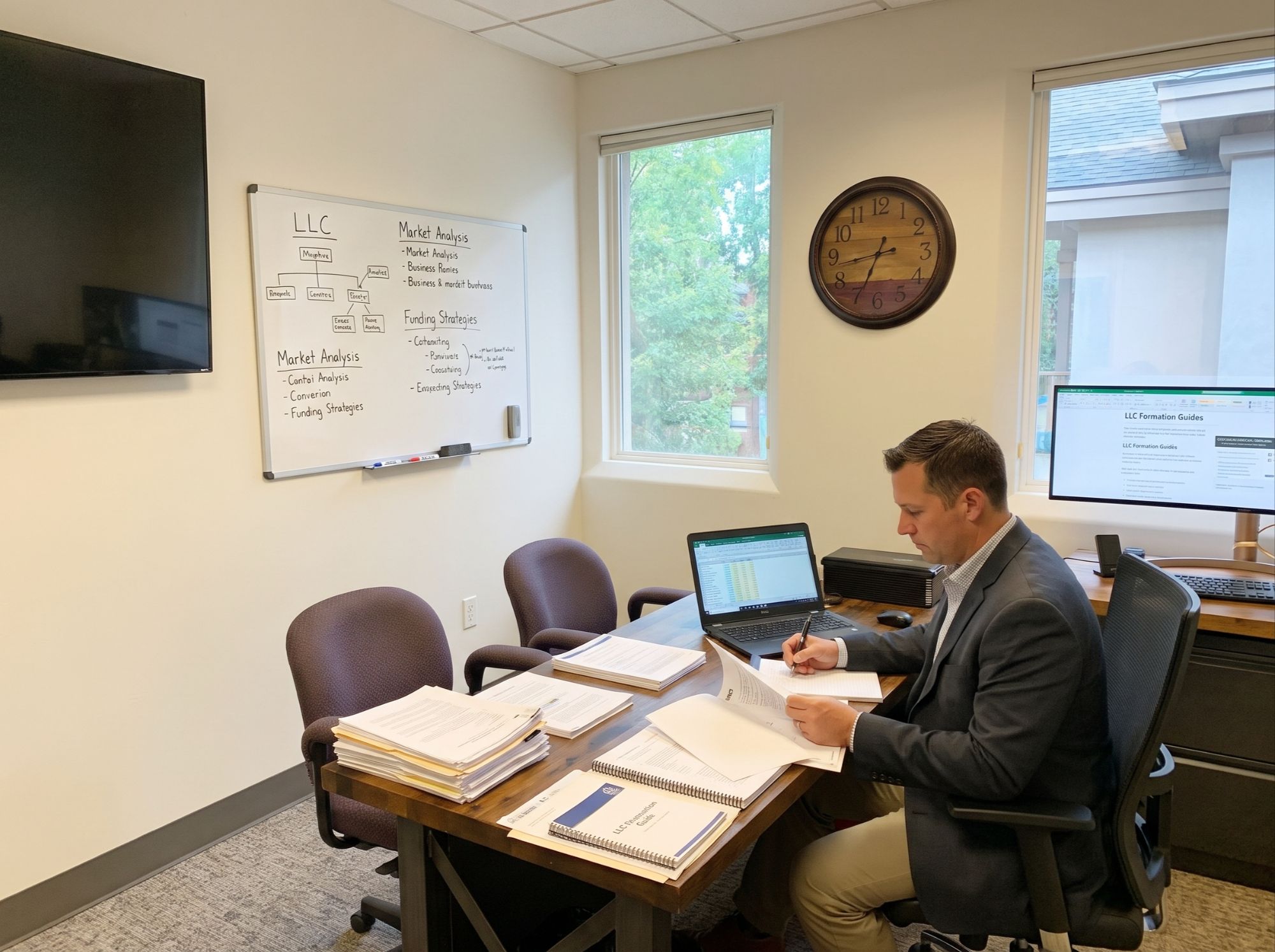
How Do I Move My LLC or Corporation to Nevada?
The source describes two common paths.
The best choice depends on the entity, ownership structure, tax history, contracts, licenses, and the states involved.
Convert or Domesticate the Existing Entity
Nevada law provides a conversion or domestication framework under NRS Chapter 92A.
Whether this route works depends in part on whether the entity's current state permits the transaction and whether your attorney recommends it.
Form a New Nevada Entity
Another approach is to establish a new Nevada LLC or corporation, move the business operations into it, and then formally close the old California entity when appropriate.
Don't Leave the California Entity Hanging Open
According to the source, California's $800 annual entity tax can continue until the California registration is formally closed, even when the business becomes inactive.
Coordinate the shutdown process with your CPA and corporate attorney rather than assuming the entity disappears when operations move.
Moving the Business and Your Household?
The entity is only one part of the transition. Use The 2026 NV Residency Guide to organize the broader California-to-Nevada move for your household and personal domicile.
Explore The 2026 NV Residency Guide
What Will Nevada Charge My Business?
Nevada does not impose a conventional corporate income tax or franchise tax, but businesses can still have state-level licenses and other taxes.
The source summarizes the main items this way.
| Nevada Item | Source Figure | What It Means |
|---|---|---|
| State Business License | $200 for most entities $500 for corporations |
Annual Nevada business-license cost identified in the source. |
| Modified Business Tax | 1.17% on quarterly wages above $50,000 | Payroll-related tax described in the source. Confirm the applicable current rate and threshold with your CPA. |
| Commerce Tax | Applies above $4 million in Nevada revenue | The source gives industry rates ranging from approximately 0.051% to 0.331%. |
| Corporate Income Tax | None | Nevada does not impose a conventional corporate income tax. |
| Franchise Tax | None | Nevada does not impose the type of franchise tax described in the source for this comparison. |
Business Tax Rules Change
The source's figures are useful for planning, but rates, thresholds, filing rules, and license fees can change over time.
Have your CPA verify the current Nevada and California rules before you restructure the entity.
What About a Family Office?
A family office often involves more than a single operating company.
There may be investment entities, management companies, LLCs holding real estate, trusts, payroll, employees, and relationships with professionals in multiple states.
Moving the family's primary residence to Nevada can be part of the strategy, but each entity and source of income should still be evaluated separately.
Operating Companies
Determine where customers, employees, payroll, property, and business activities remain after the move.
Investment Entities
Review the state of formation, management, ownership, and tax treatment of each investment vehicle.
Real Estate LLCs
Entities holding property in another state may continue to have filing or tax obligations in that state.
Trusts & Estate Planning
Coordinate the business relocation with your trust and estate-planning attorneys rather than treating the entity move as an isolated transaction.

Is Nevada Good for Asset Protection & Privacy?
Nevada is often attractive to business owners for more than taxes.
According to the source, Nevada's charging-order law under NRS 86.401 can be a meaningful advantage for multi-member LLCs.
Charging-Order Protection
The source identifies Nevada's charging-order law as an advantage for multi-member LLCs.
Registered Agent
A Nevada registered agent can help keep your home address off many public business filings.
Private-Friendly
Nevada can be privacy-friendly, but the source emphasizes that this does not mean the entity is anonymous.
Single-Member LLCs
The source notes that single-member LLCs can be treated differently, so asset-protection questions should be reviewed with a qualified attorney.
Good to Know
A clean Nevada residency strategy plus a properly handled California entity transition is much stronger than addressing only one side of the move.
Start early so the personal relocation, business filings, banking, payroll, contracts, and professional advice all line up.
What Should I Review Before Moving the Business?
The actual entity filing is only one part of the process.
Nevada Business Relocation Checklist
- Confirm whether your entity still has California sales, payroll, property, employees, or business activity.
- Review the current California doing-business thresholds with your CPA.
- Decide whether conversion, domestication, or a new Nevada entity is the better structure.
- Have a corporate attorney review NRS Chapter 92A and the rules of the entity's current state.
- If forming a new entity, plan how contracts, assets, employees, banking, and operations will transfer.
- Formally close the California registration when appropriate.
- Confirm Nevada business-license requirements.
- Review Modified Business Tax exposure if the business has payroll.
- Review Nevada Commerce Tax rules if Nevada revenue approaches the applicable threshold.
- Establish the appropriate Nevada registered-agent relationship.
- Coordinate family-office entities, trusts, and real estate LLCs with the broader relocation plan.
- Document your personal Nevada move separately from the business-entity transition.
Document Your Nevada Transition Carefully
If your business relocation is happening alongside a personal move to Lake Tahoe, use the NV Residency Guide - Safe Harbor Checklist to organize the practical records and steps supporting the personal side of your Nevada transition.
Get the Safe Harbor Checklist
The Takeaway
Moving your LLC, S-Corp, corporation, or family office to Nevada can be simpler than many owners expect.
The important part is not assuming that your personal relocation automatically moves the tax obligations of the business.
Decide how the entity will be structured, confirm where the business will actually operate, properly close registrations that are no longer needed, and coordinate the move with your CPA and corporate attorney.
When the business move and the personal Nevada move are planned together, the transition is much easier to manage.
Let's Make Your Nevada Move Feel Easy
Tahoe Tony has more than 28 years of experience helping families and business owners settle across Incline Village, Crystal Bay, Glenbrook, Zephyr Cove, and the Nevada side of Lake Tahoe.
While your CPA and attorneys handle the tax and entity structure, Tahoe Tony can help coordinate the real estate side of the move and connect you with trusted local professionals.
Schedule a Nevada Move Strategy ConsultationThis article is for general informational purposes only and does not constitute tax, legal, corporate, accounting, asset-protection, financial, business-formation, residency, or real estate advice. California doing-business thresholds, annual entity taxes, Nevada business-license fees, Modified Business Tax rates, Commerce Tax thresholds and rates, entity-conversion rules, domestication procedures, filing requirements, charging-order law, registered-agent requirements, and other state rules can change. Figures referenced from the source include 2025 examples and should not be treated as current tax advice without verification. Business owners should consult qualified CPAs, tax attorneys, corporate attorneys, and other appropriate professionals before changing residency, forming or converting an entity, closing a California registration, transferring assets, changing payroll, or restructuring a family office. California is used as the primary example; other states have their own rules. Tony Tuoto is a licensed real estate broker, not a CPA, tax attorney, corporate attorney, financial adviser, or asset-protection attorney.
Nevada Business Relocation FAQ
Frequently Asked Questions
Common questions business owners ask about moving an LLC, S-Corp, corporation, or family office from California to Nevada and the Nevada side of Lake Tahoe.
Does moving to Nevada make my California business tax-free? +
No. Your personal residency move and your business entity are separate. California can continue taxing an entity that is still doing business there, including businesses with California sales, property, payroll, employees, or other qualifying activity.
Can I move my LLC or S-Corp from California to Nevada? +
Often, yes. The source describes conversion or domestication under Nevada law, where permitted, or forming a new Nevada LLC or corporation and moving the business operations into it. A corporate attorney and CPA should determine the best route.
What happens if I leave my California entity open? +
According to the source, California's $800 annual entity tax can continue until the California registration is formally closed, even if the business is no longer active.
Does Nevada have a corporate income tax? +
Nevada does not impose a conventional corporate income tax. Businesses can still have Nevada business-license costs, payroll-related Modified Business Tax, and Commerce Tax depending on their operations and revenue.
How much is the Nevada state business license? +
The source lists the state business license at $200 for most entities and $500 for corporations, renewed yearly. Verify the current fee before filing because state charges can change.
What is Nevada's Modified Business Tax? +
The source describes a 1.17% Modified Business Tax on quarterly wages above $50,000. Payroll thresholds and rates should be confirmed with your CPA under the rules currently in effect.
When does Nevada's Commerce Tax apply? +
According to the source, Commerce Tax applies when Nevada gross revenue exceeds $4 million, with industry rates ranging from approximately 0.051% to 0.331%. Current rules should be confirmed before relying on these figures.
Is Nevada good for LLC asset protection? +
The source identifies Nevada's charging-order protection under NRS 86.401 as a meaningful advantage for multi-member LLCs. Single-member LLCs can be treated differently, so asset-protection planning should be reviewed with a qualified attorney.
Can a Nevada registered agent keep my home address private? +
A registered agent can help keep your personal home address off many public business filings. Nevada can be privacy-friendly, but that does not mean the entity or its owners are anonymous.
What should I do first if I want to move my business to Nevada? +
Start by having your CPA determine whether the business will continue to have California sales, payroll, property, employees, or other California activity. Then have a corporate attorney compare conversion, domestication, or forming a new Nevada entity before making filings.
If the business move is happening alongside your personal Nevada relocation, review the 2026 NV Residency Guide and the Safe Harbor Checklist .
Categories
Recent Posts