Buying a Lake Tahoe Home Next to National Forest Land: A Simple FAQ
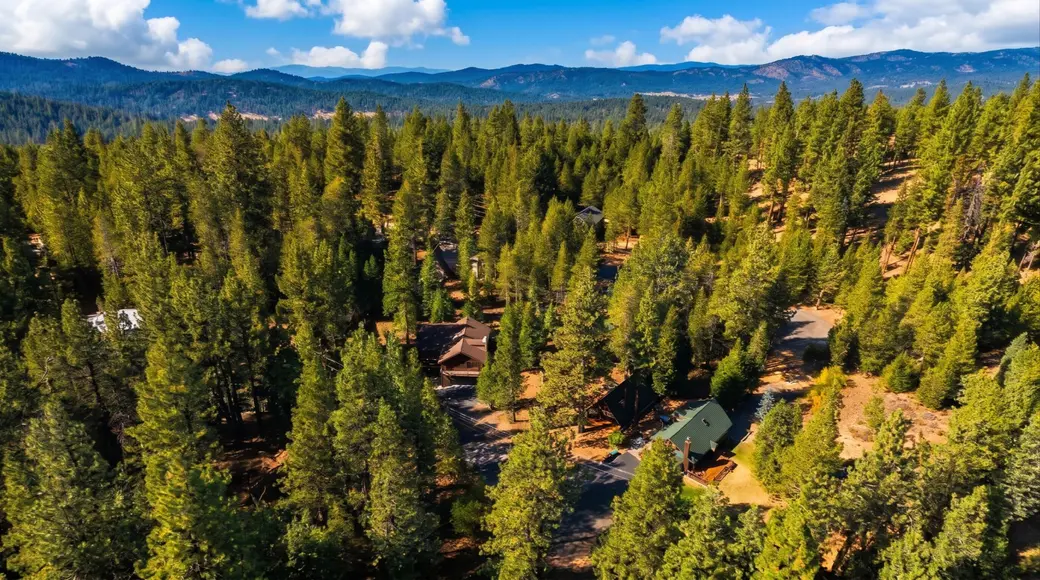
Nevada Tahoe Forest-Edge Home Guide
Buying a Lake Tahoe Home Next to National Forest Land: A Simple FAQ
Waking up to quiet forest views with trails just beyond your back fence sounds pretty good. Here's what Nevada Lake Tahoe buyers should know about public land, boundaries, defensible space, tree work, encroachments, and surveys before closing.
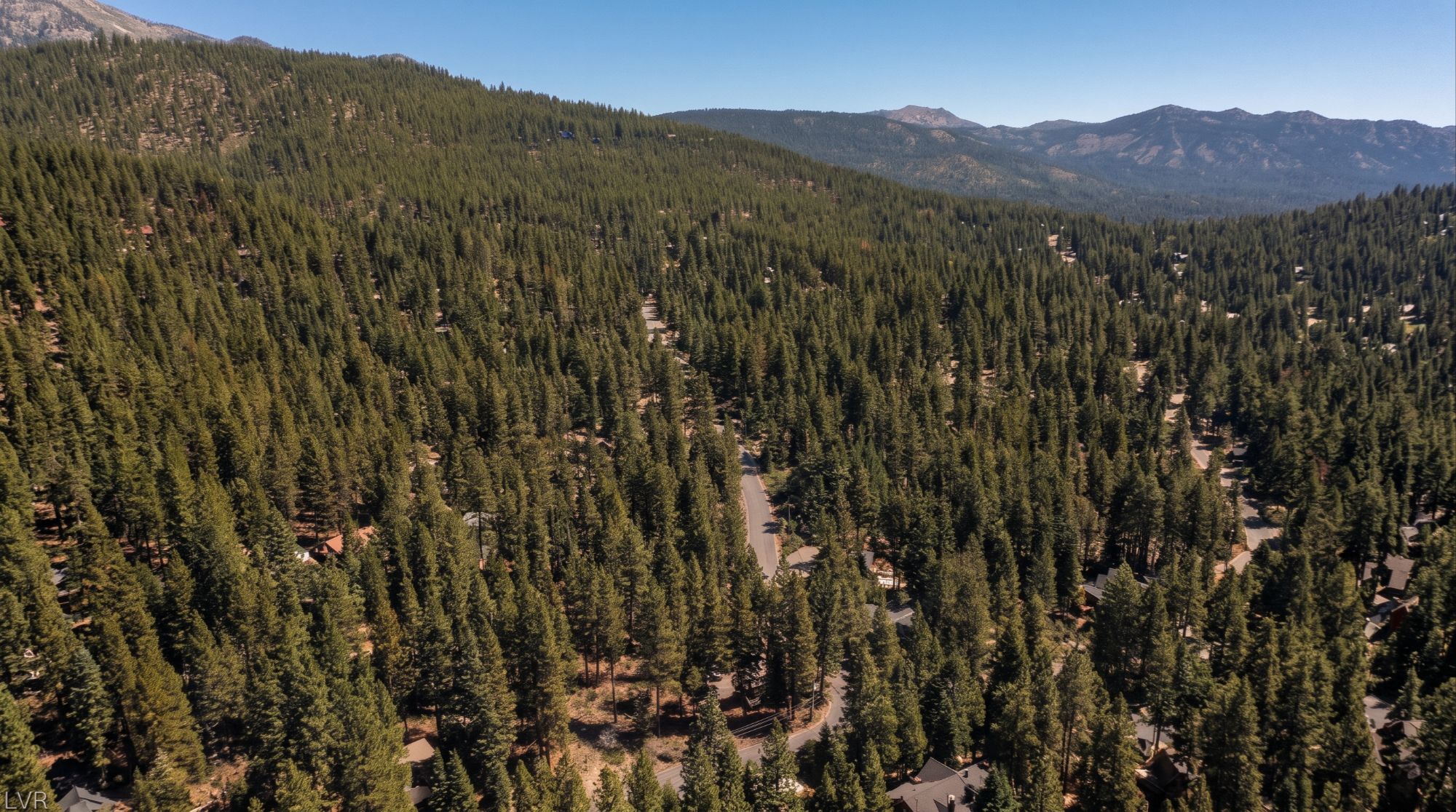
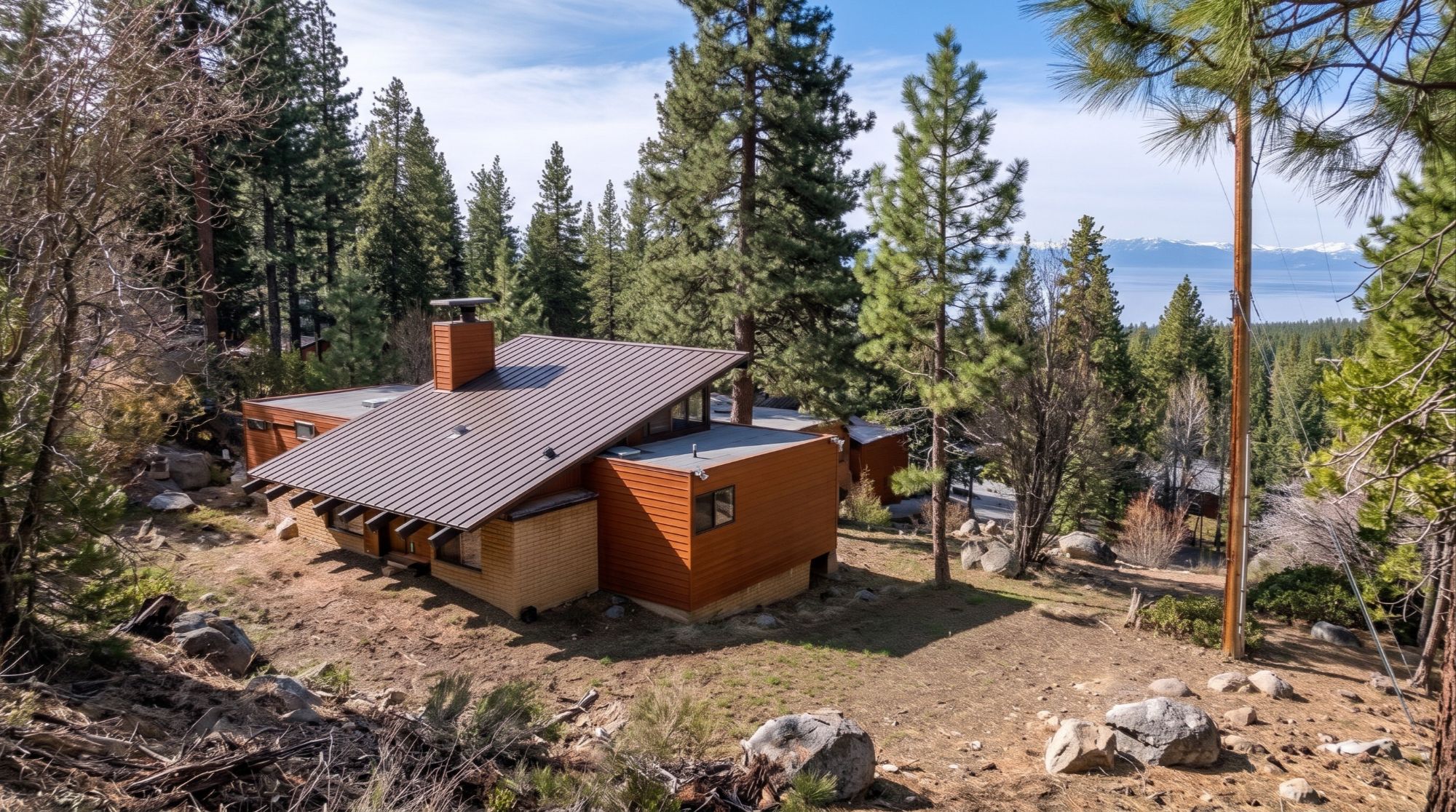
Many homes on the Nevada side of Lake Tahoe border public land managed by the U.S. Forest Service or Nevada State Parks.
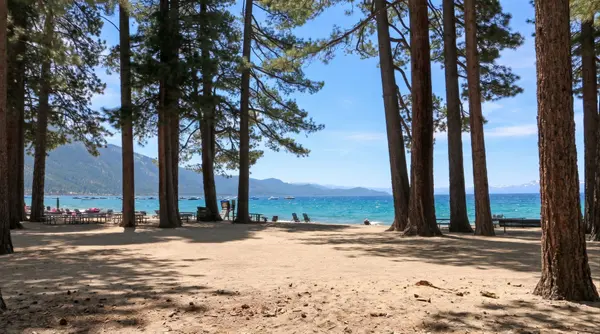
That setting can provide beautiful forest views, trail connections, and an added sense of privacy.
But public land is still public land. It is not automatically an extension of your backyard.
A few simple checks during escrow can help you understand exactly what you are buying and which rules apply.
Forest-Edge Living at a Glance
What Are the Pros of Backing to Forest Land?
Privacy, forest views, and trail connections are the big ones.
Public forest land is also much less likely to be built on than a neighboring private lot, although no one can promise what the future may hold.
Beautiful Setting, But Still Public
A home can feel extremely private while still bordering land that members of the public are allowed to use.
Who Owns the Land Behind the Home?
Do not assume the land is automatically U.S. Forest Service property.
It could be managed or owned by:
U.S. Forest Service
Federal public land. Forest Service rules apply to activities and improvements on that land.
Nevada State Parks
State land rather than federal land, so the applicable rules can be different.
Private Property
In some cases the adjoining parcel may simply belong to another private owner.
Ask Early
Confirm who actually owns or manages the adjoining parcel during your due-diligence period.
That tells you which agency or owner you need to contact before doing any work across the boundary.
Considering Nevada for More Than the Forest Views?
If your Lake Tahoe purchase is also part of a move from California, Washington, or another higher-tax state, estimate your potential Nevada tax savings while comparing homes and long-term ownership costs.
Use the NV Tax Savings Calculator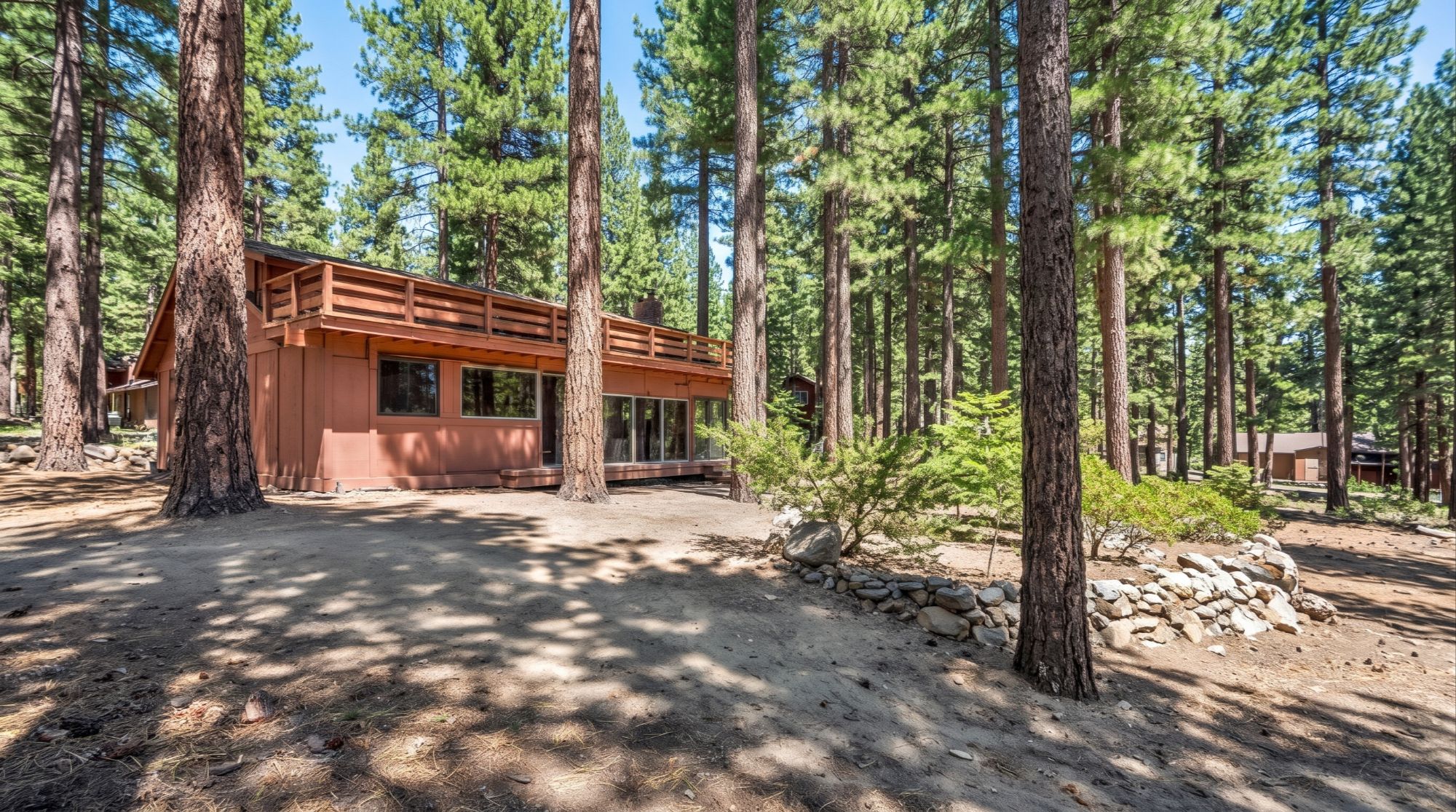
Will I See People on the Land Behind Me?
Possibly.
National Forest land is open to the public, so you may occasionally see hikers or other users nearby.
The public land is not an extension of your private yard, even when it feels visually connected to your property.
What Can't I Do on Forest Service Land?
Because the land belongs to the public, using it for private purposes without permission is not allowed.
Furniture
Do not treat adjoining federal land as additional patio or backyard space for private furniture.
Fire Pits
Do not add a private fire pit on Forest Service land without the appropriate authorization.
Irrigation
Extending private irrigation beyond your property boundary can create an unauthorized use.
Private Paths
Building or extending private paths onto Forest Service land requires appropriate permission.
Tree Cutting
Do not cut or fell trees on federal land on your own.
What About an Old Fence or Shed?
If an older fence, shed, or other improvement crosses onto Forest Service land, the Forest Service can require the encroachment to be removed and the area restored.
What Is Defensible Space?
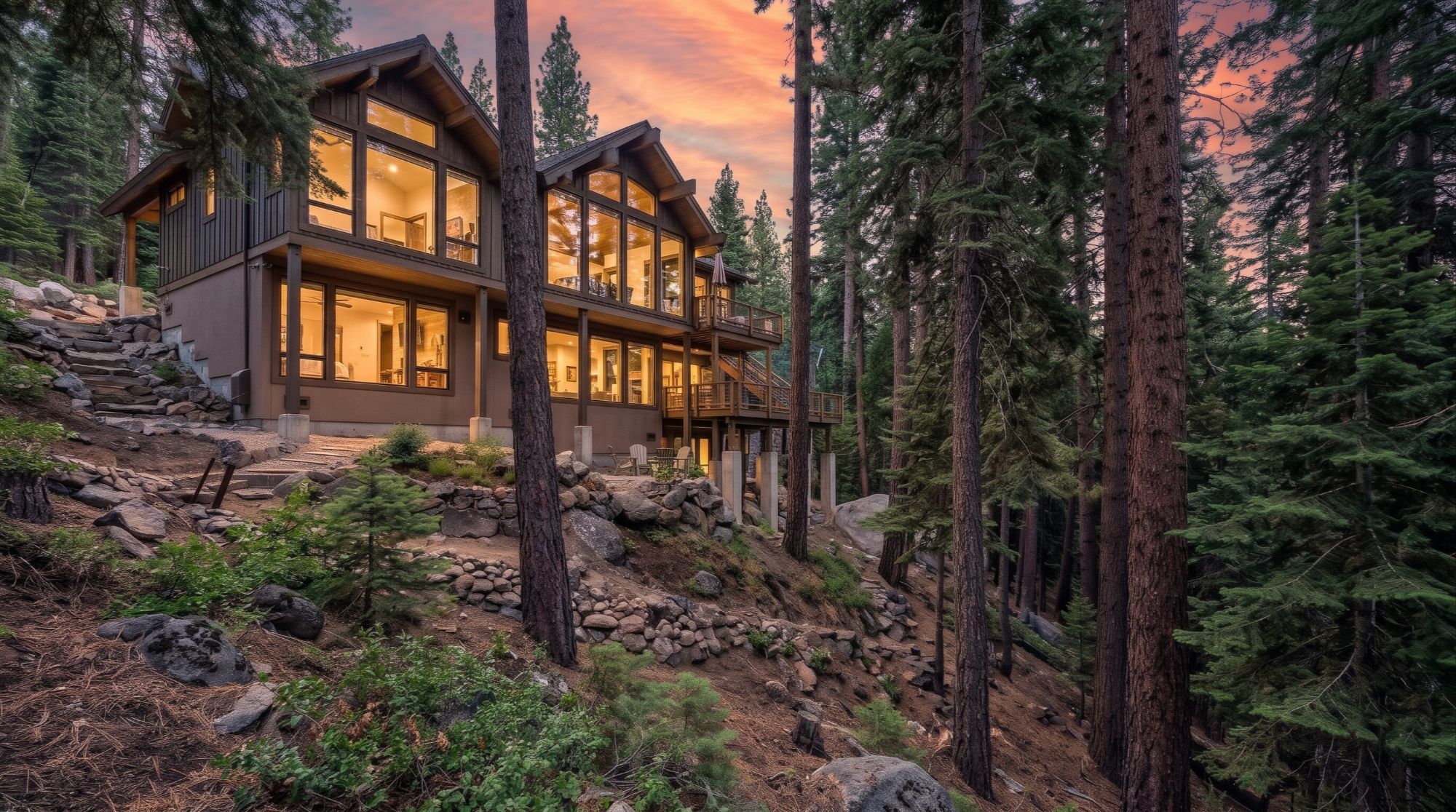
Defensible space is the cleared, fire-safe area around your home.
According to the source, Tahoe Basin defensible-space planning includes two important zones.
| Zone | Distance | What It Means |
|---|---|---|
| Zone 1 | Within 30 feet of the home. | The area immediately surrounding the structure where defensible-space maintenance is especially important. |
| Zone 2 | 30 to 100 feet, or to the property line. | The broader defensible-space area. The zone can physically extend beyond your private boundary, but rules for work on adjoining public land are separate. |
Who Can Help Me With Defensible Space?
Start with your local fire district.
The source recommends requesting a free defensible-space inspection.
Incline Village & Crystal Bay
North Lake Tahoe Fire Protection District
(775) 831-0351
Zephyr Cove & Glenbrook
Tahoe Douglas Fire Protection District
(775) 588-3591
Helpful for Insurance Records Too
According to the source, once you complete the recommended work, the inspection can serve as proof of defensible space for insurers.
Verify current requirements with your insurer and fire district.
Can I Clear Brush on the Forest Land Behind My Home?
Yes, with the right approval.
The Forest Service's Lake Tahoe Basin Management Unit has a Homeowner Defensible Space program that can help homeowners address low-impact cleanup on adjoining forest land.
Get the Defensible-Space Inspection
Start with your local fire district and determine what work is recommended.
Contact the Forest Service
Ask the Lake Tahoe Basin Management Unit about its Homeowner Defensible Space program.
The source lists its hazardous-fuels line as (530) 543-2759.
Use the Program for Approved Cleanup
The source says the program can allow low-impact cleanup on Forest Service land within 100 feet of the home.
Get Approval for Larger Work
Larger work or tree removal requires prior Forest Service approval.
Do not cut or fell trees on federal land on your own.
The Process Is Usually Manageable
The source describes the work as generally straightforward once you have contacted the appropriate agencies.
The result can improve the home's wildfire preparedness while keeping the work properly authorized.
Planning to Make Nevada Your Primary Residence?
Forest-edge living is only one part of your Nevada Tahoe transition. Use The 2026 NV Residency Guide to organize the broader move from California, Washington, or another state.
Explore The 2026 NV Residency GuideWhat About Trees on My Own Property?
Tree-removal rules still apply when the tree is on your own parcel.
The source notes that local fire districts can often issue the applicable TRPA permit.
Start with your local fire district's free defensible-space inspection before removing trees for fire-safety purposes.
Why Get a Boundary Survey?
Older Tahoe fences, driveways, retaining walls, and other improvements do not always sit exactly where the legal property line is.
A current boundary survey, often called an ALTA/NSPS survey, can show exactly where your property lines are.
It can also identify easements and encroachments.
Pro Tip: Know What You're Buying
Order the survey early in your due-diligence period.
Ask who owns the adjoining land, whether it is USFS, Nevada State Parks, or private property.
Also ask the seller for any existing Forest Service or local fire-district defensible-space paperwork.
Doesn't Title Insurance Already Cover This?
Not necessarily.
According to the source, standard title insurance usually excludes matters that a survey would reveal.
That is why obtaining a current survey during due diligence can be valuable when buying a Tahoe property adjoining public land.
Private Land vs. National Forest Land
The property line still matters, even when the forest beyond it feels like part of the home's setting.
| Item | Your Private Parcel | Adjacent National Forest |
|---|---|---|
| Brush & Needle Removal | Expected on your property as part of defensible-space maintenance. | Only with Forest Service approval or a program agreement. |
| Trees | Tree-removal rules apply; fire districts can often issue the applicable TRPA permit. | Only with Forest Service approval. |
| Patios & Landscaping | Allowed within applicable TRPA land-coverage rules. | Not allowed as a private extension of the yard; it can count as an encroachment. |
| Public Access | Private. | Open to the public. |
What Should I Verify Before Buying?
If the forest-edge setting is one of the reasons you're considering the property, make these items part of your escrow due diligence.
Forest-Edge Home Buyer Checklist
- Confirm who owns or manages the land behind the home.
- Determine whether the adjoining property is U.S. Forest Service, Nevada State Parks, or privately owned.
- Order a current boundary survey early in your due-diligence period.
- Review the survey for fences, sheds, driveways, retaining walls, or other encroachments.
- Review recorded easements affecting the parcel.
- Ask the title company how survey-related matters are handled under the title policy.
- Request existing Forest Service or fire-district defensible-space paperwork from the seller.
- Contact the applicable local fire district for a defensible-space inspection.
- If work beyond the property line is needed, contact the applicable public-land agency before doing the work.
- Do not assume you can remove trees, add irrigation, build paths, or extend landscaping onto adjoining National Forest land.
- Remember that National Forest land remains open to the public.
- Address known boundary or encroachment issues before removing contingencies whenever possible.
Build a More Deliberate Nevada Transition
If your forest-edge Tahoe home will become part of your Nevada residency strategy, use the NV Residency Guide - Safe Harbor Checklist to organize your relocation records and practical moving steps.
Get the Safe Harbor Checklist
The Takeaway
A Lake Tahoe home bordering public forest can offer a remarkable combination of privacy, views, and immediate access to nature.
The important part is understanding exactly where your private parcel ends and the public land begins.
Confirm who owns the adjoining land, order a survey, identify any encroachments, and coordinate defensible-space work with the appropriate fire district and land-management agency.
A little due diligence during escrow can give you much more confidence once the home is yours.
Let's Find Your Forest-Edge Home
With more than 28 years helping families settle across Incline Village, Crystal Bay, Glenbrook, and Zephyr Cove, Tahoe Tony helps buyers check boundaries and defensible-space needs early.
He can also connect you with licensed surveyors, title professionals, and local fire-district contacts so you better understand the property before closing.
Tour Homes Near Public ForestThis article is for general informational purposes only and does not constitute surveying, legal, title, forestry, wildfire-safety, land-use, TRPA, insurance, tax, or real estate advice. Boundary, title, defensible-space, tree-removal, public-land, Forest Service, State Parks, TRPA, insurance, and fire-district rules vary by property and can change over time. Contact information can also change. Buyers and homeowners should confirm property-specific boundaries with a licensed surveyor, title matters with their title company, defensible-space requirements with the appropriate local fire district, and public-land work with the agency that actually owns or manages the adjoining land. Nevada residency and tax matters should be reviewed with a qualified CPA or tax attorney. Tony Tuoto is a licensed real estate broker, not a surveyor, attorney, forester, fire official, insurance professional, or government representative.
National Forest Property FAQ
Frequently Asked Questions
Common questions Nevada Tahoe buyers ask about homes bordering National Forest land, public access, defensible space, tree removal, boundaries, encroachments, surveys, and title insurance.
What are the benefits of buying a Tahoe home next to forest land? +
Privacy, forest views, and trail connections are among the biggest benefits. Public forest land is also much less likely to be built on than a neighboring private parcel, although future conditions cannot be guaranteed.
Who might own the land behind my Tahoe home? +
It could be the U.S. Forest Service, Nevada State Parks, or a private owner. Because the rules differ, confirm who owns or manages the adjoining parcel early in your due diligence.
Will I see people on the National Forest land behind my home? +
Possibly. National Forest land is open to the public, so you may see hikers or other users nearby. It is not an extension of your private yard.
What can't I do on Forest Service land? +
Using public land for private purposes without permission is not allowed. Furniture, fire pits, irrigation, private paths, tree cutting, and other improvements can create unauthorized uses or encroachments.
What is defensible space around a Tahoe home? +
Defensible space is the cleared, fire-safe area around the home. The source identifies Zone 1 as within 30 feet of the home and Zone 2 as 30 to 100 feet, or to the property line.
Can I get a free defensible-space inspection at Lake Tahoe? +
Yes. The source says local Tahoe fire districts provide free defensible-space inspections. Incline Village and Crystal Bay are served by North Lake Tahoe Fire Protection District, while Zephyr Cove and Glenbrook are served by Tahoe Douglas Fire Protection District.
Can I clear brush on Forest Service land next to my home? +
Yes, with the appropriate approval. The Forest Service's Lake Tahoe Basin Management Unit has a Homeowner Defensible Space program that can allow low-impact cleanup on forest land within 100 feet of the home. Larger work or tree removal requires prior Forest Service approval.
What about trees on my own property? +
Tree-removal rules still apply. The source notes that local fire districts can often issue the applicable TRPA permit. Start with a free defensible-space inspection.
Why should I get a boundary survey? +
Older fences, driveways, walls, and other improvements do not always sit exactly on the legal property line. A current ALTA/NSPS survey can identify property lines, easements, and encroachments.
Doesn't title insurance already cover boundary problems? +
Not necessarily. According to the source, standard title insurance usually excludes matters that a survey would reveal.
If your Tahoe purchase is also part of a Nevada relocation, review the 2026 NV Residency Guide and the Safe Harbor Checklist .
Categories
Recent Posts